

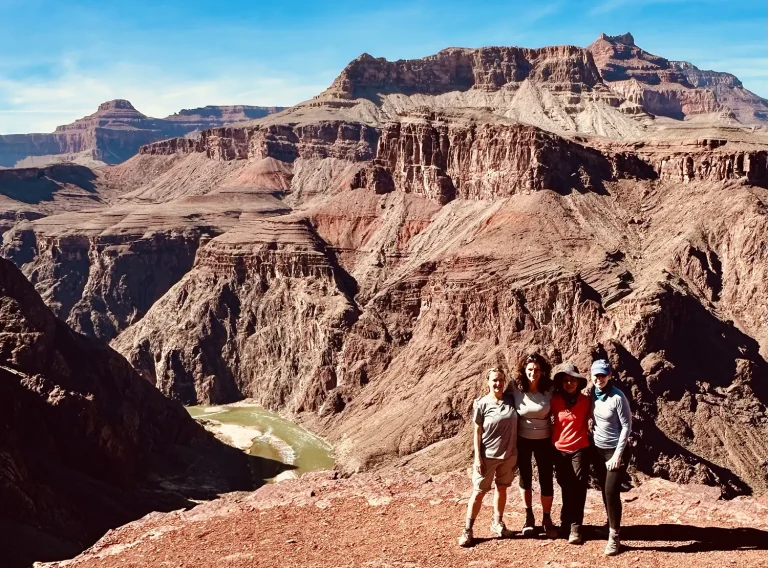


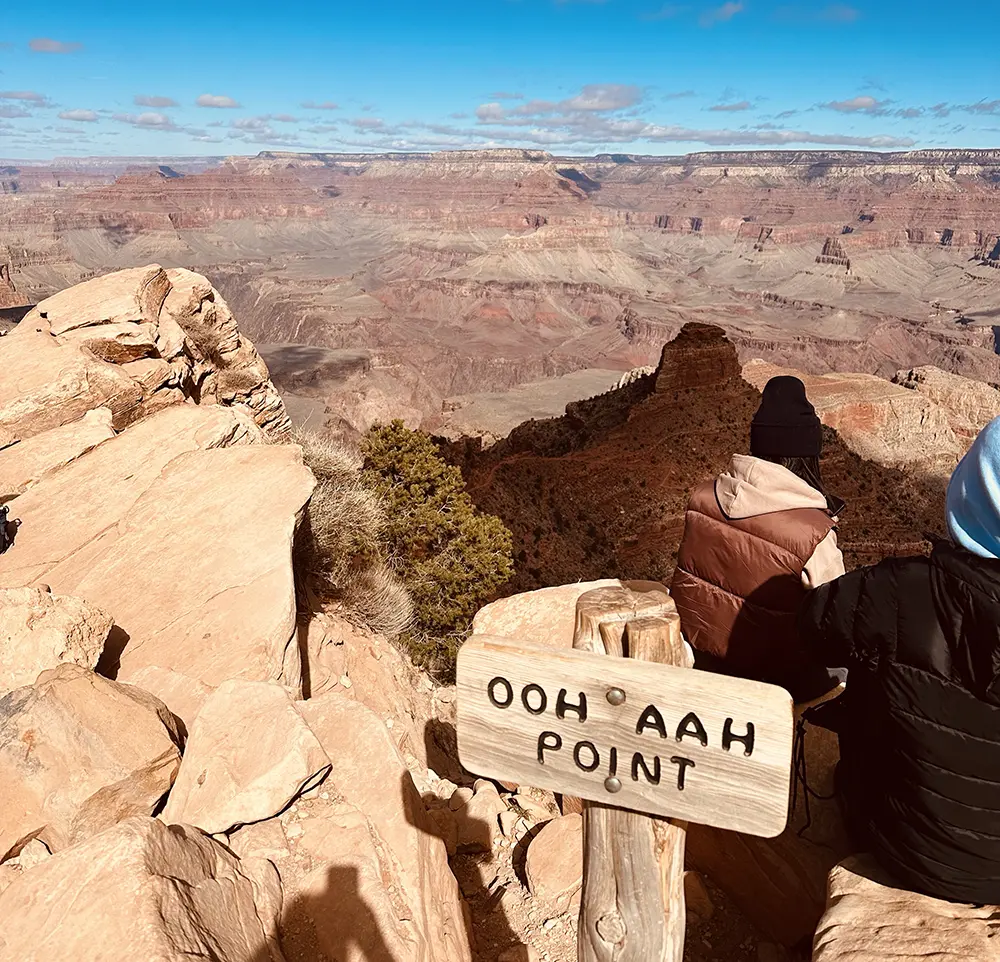
The Grand Canyon is one of the most iconic national parks in the United States. Approximately 5 million visitors a year stand at the rim of the Grand Canyon to admire the majestic vastness of the canyon. Many will hike on one of the trails that wind their way to the bottom of the canyon, but most of those hikers will turn around at the well-known Ooh-Aah Lookout Point, less than a mile into the descent.
Last year, I made the full 7.5-mile descent down the South Kaibab Trail, spent the night at Phantom Ranch, and climbed back out the next day. The experience was challenging, awe-inspiring, and absolutely worth it.
I was surprised to learn that only 1% of those 5 million visitors make it to the bottom of the canyon. It’s not an easy hike and certainly requires a significant level of physical fitness and athletic ability.
That said, if you are capable of training for it, you absolutely should. The scenery constantly changes as you descend in a way that’s hard to comprehend merely looking down from the rim. The South Kaibab Trail is generally considered the most scenic trail from the South Rim. Think jaw-dropping panoramic views, epic switchbacks, and not a single dull step.
The trail zigzags down through red rock amphitheaters and ancient rock layers with sweeping views and wide-open vistas that make you feel like you’re descending into another world. The final stretch includes a dramatic black suspension bridge over the Colorado River. Crossing that bridge and ultimately resting my tired feet in the Colorado River with a cold drink in hand (thanks to the mule that carried it down) was a victory in and of itself, even knowing the hard part was climbing up the next day.
How to Sleep (or not Sleep) at the Bottom of the Canyon
Beyond the physical fitness requirement, another limiting factor of making it to the bottom of the Canyon is the extremely limited accommodation options. You have three choices:
- Sleep at Phantom Ranch: This is the only place that you can actually sleep in a bed in the Canyon. Getting a reservation requires a lot of planning and persistence.
- Camp: Easier to get a permit, far less expensive, but requires having your own gear, and willingness and ability to carry it or pay for a mule.
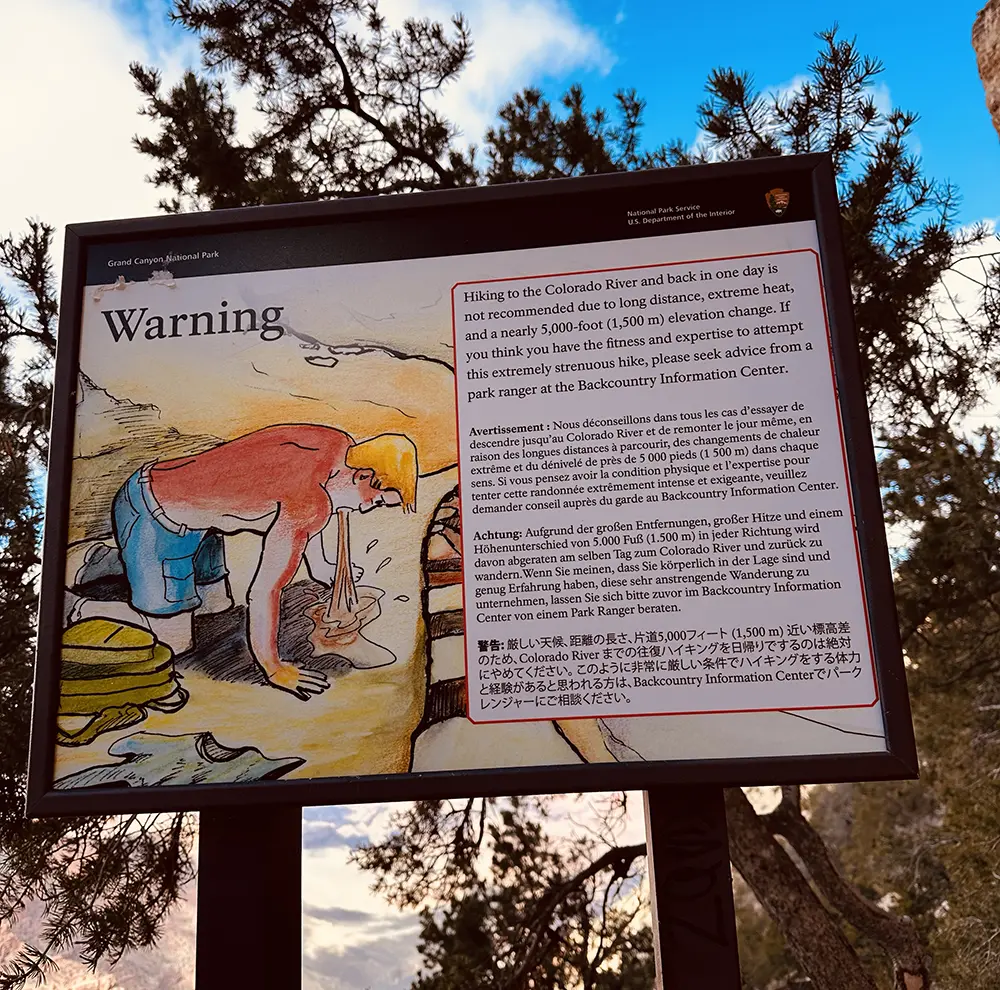
- Rim-to-Rim or Rim-to-River-to-Rim in a day: For very serious, experienced hikers, going down and back in a day is a possibility, although the National Park Service recommends against it.
If you hike rim-to-rim (go down the South Rim and up the North Rim or vice versa), you add an extra planning challenge of needing to find transportation for the four-hour drive around the canyon from one rim to the other. Or for an extra challenge, you can go rim-to-rim-to-rim, which means down and up the canyon in a day and then back down and up the other way (lodging options are much more plentiful on both rims).
The Phantom Ranch Experience
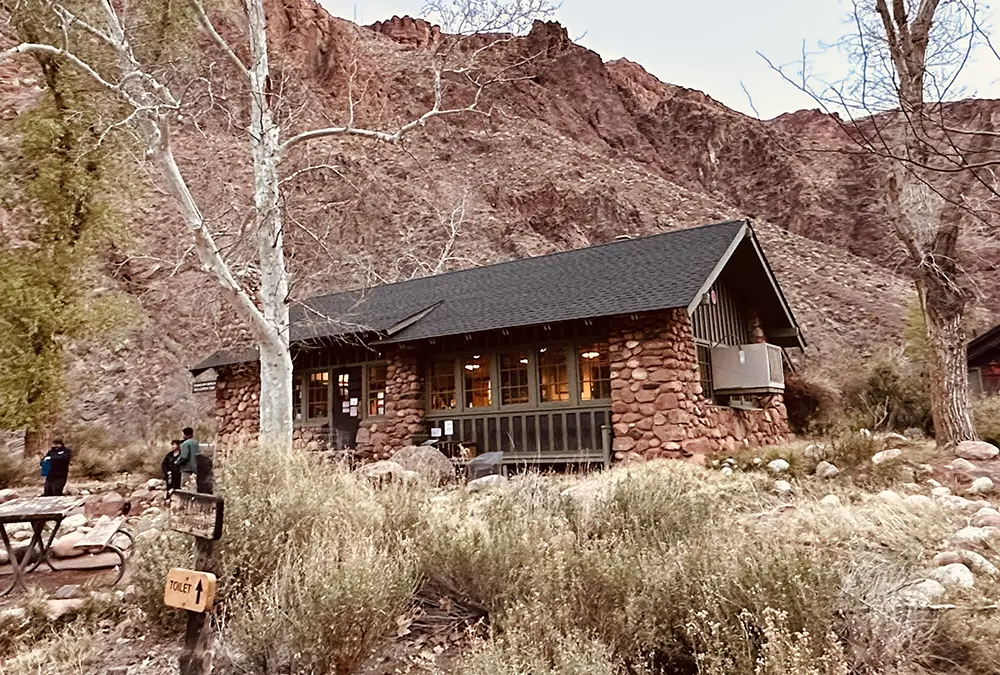
If camping isn’t your thing, Phantom Ranch is rustic, magical, and extremely hard to get into. At night, you can lie on a bench after dinner and just stare up, canyon walls rising into the blackness, thinking: We’re really down here.
So, how do you get a reservation? Phantom Ranch runs on a lottery system. You need to apply 15 months in advance of the month you would like to go. You can apply anytime during the first 15 days of the month. However, your chances of winning are fairly low. We applied every month for any day of the month for over six months without winning.
You can also check daily for cancellations, and this is how we ultimately scored a Monday night reservation in March. Patience, flexibility, and persistence—or extreme luck— are the only way to stay at Phantom Ranch. We did hear from fellow hikers at the Ranch that they got last-minute reservations by calling even when the website showed no availability.
Cabins are $222 for two people or $265 for four, which comes out to a very reasonable $66.25 per person. The Ranch used to have dorm-style accommodation in the past that was less expensive and easier to reserve, but it’s currently closed indefinitely. Cabins are basic, but include a small bathroom and linens.
Phantom Ranch also provides meals that must be reserved well in advance. Meals at the ranch are expensive, but for me, it was worth it not to have to carry my food on what is already a very difficult hike without the added weight.
- Steak Dinner: $64.82
- Beef Stew Dinner: $46.24
- Vegetarian Chili Dinner: $43.37
- Hiker’s Breakfast (eggs, pancakes, bacon, coffee): $32.84
- Box Lunch: $27.19
Dinner and breakfast are family-style. Fellow hikers tend to be extremely friendly so making new friends who shared a similar adventure experience adds to the whole experience.
Camping
Bright Angel Campground is the only camping site at the bottom of the canyon. Backcountry permits are required and cost $10 plus $15 per night for camping. Campers can reserve meals at Phantom Ranch, and gear transport by mule is available at Bright Angel Lodge on the South Rim for approximately $100.
The Hike Back Up
It’s a long climb, there’s no sugarcoating that. It’s 4,700 feet of elevation gain, and depending on when you go, the sun finds you early. There’s no crazy steep scaling of canyon walls, just seemingly never-ending switchbacks and a consistent slog uphill.
As we got closer to the rim, we encountered more and more of the 99% that didn’t make it to the bottom, who saw our hiking poles (an absolute must) and tired faces and admiringly asked if we were coming from the bottom. It was a badge of honor to emphatically say “Yes” every time and hear the “Wow, that’s awesome” from all those who didn’t get to experience what we did.
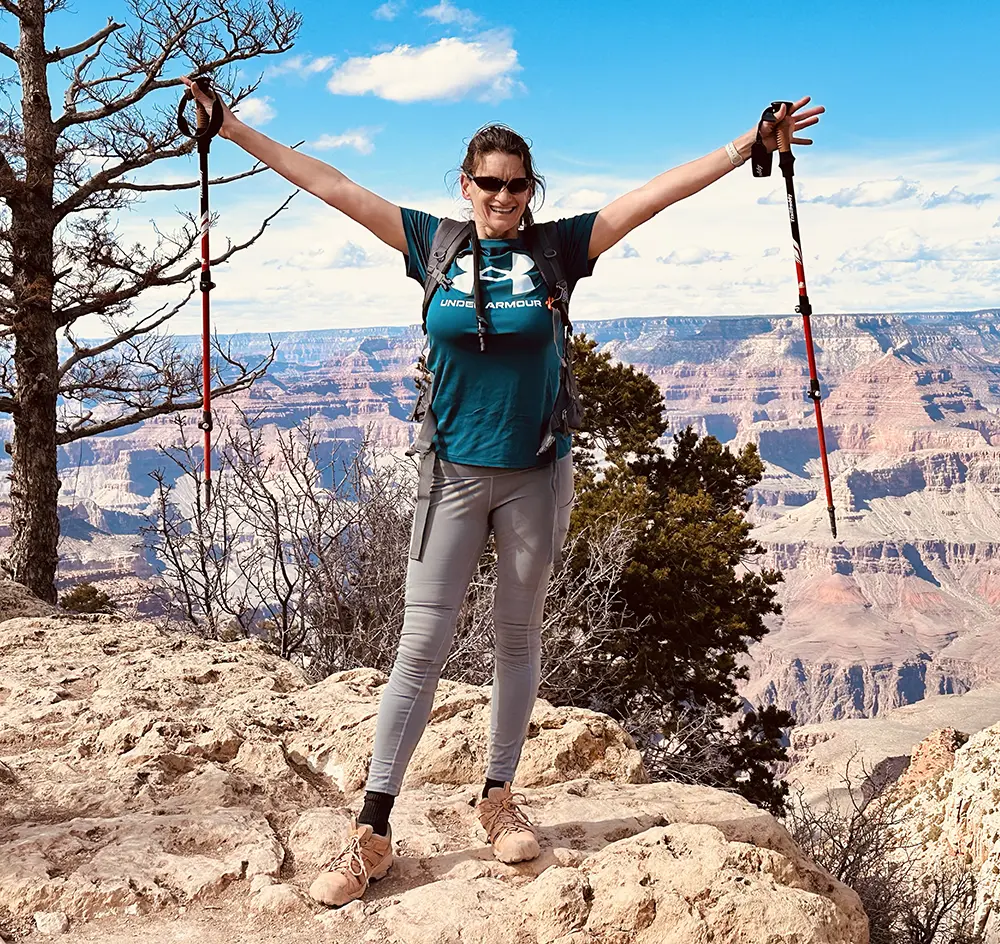
And when we finally made it back up to the top of the rim, yes, I was tired and sore, but deliriously happy. The victory photo with my poles in the air will always be one of my most proud accomplishments—physically and mentally.
We hiked the South Kaibab Trail both ways because the Bright Angel Trail was closed, but a popular option is taking the South Kaibab Trail down, which is steeper (average hiking time 4-5 hours down,) and the less steep Bright Angel Trail (average hiking time 6-10 hours up). The Bright Angel trail also has the benefit of multiple water stops (none on South Kaibab).
When to Go
If you are staying at Phantom Ranch, the best time to go is whenever you can get a reservation! We thought March would be cold, but it ended up being ideal. There was a bit of snow at the top, so we needed layers, but we were quickly hiking in t-shirts. We came prepared with snow grips for our hiking boots, but didn’t use them. Keep in mind that the bottom of the canyon is about 20 degrees warmer than the top!
Personally, I would never want to hike in this in the summer, when the sun is hot and only getting hotter and hotter on your ascent. Summer temperatures can reach 120°F (49°C).
The Thrifty Gist
This isn’t just a hike. It’s a journey through time, layers of geology, and your own mental limits. Plan early, train well, and hike smart. Phantom Ranch is hard to get into, but if you’re lucky enough to score a spot, it’s pure magic.
- If you are a camper and have the right gear, it’s a great way to be a one-percenter.
- Phantom Ranch isn’t the cheapest option, but I can’t recommend it enough. Just be patient and persistent with the lottery system and checking for cancellations. If you can get a group of four, the per-person price on cabins is very reasonable.
- Don’t buy the sack lunch. It’s cheaper to buy a la carte snacks while you are down there than the bundle.
- Bring plenty of water on the South Kaibab Trail. There is no water available anywhere on that trail.